randoms 9.24.22

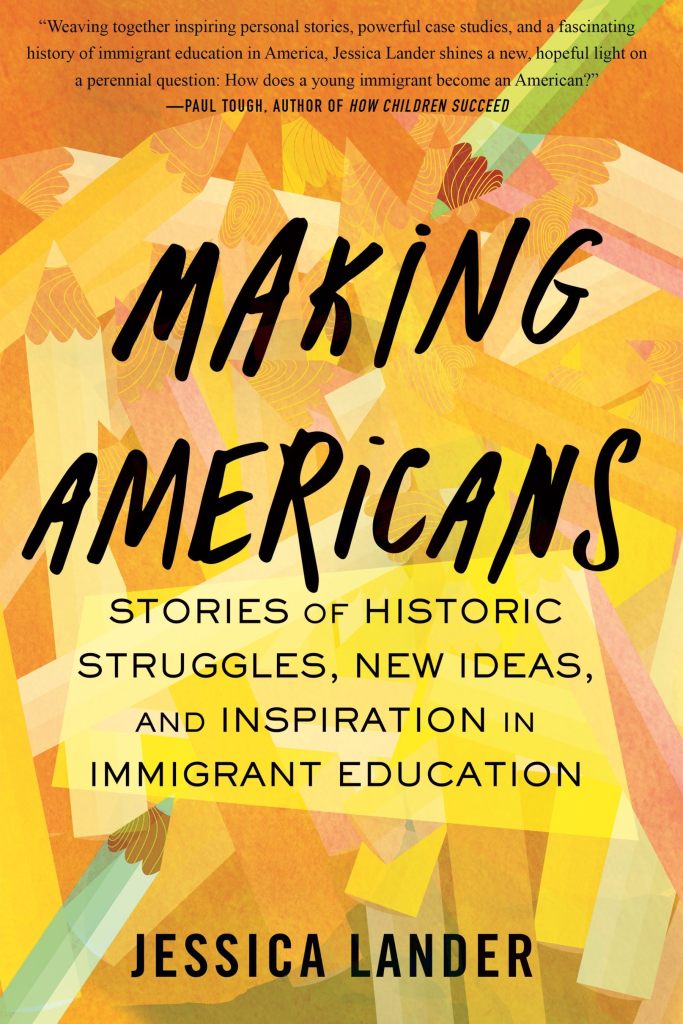
I had the great privilege of working with Jessica Lander, as she researched and wrote this very important book. I highly recommend it to all who teach and care for immigrant students and families and who believe classrooms “remain the most radical space of possibility.” (bell hooks)

In #MakingAmericans, teacher @Jessica_Lander tells captivating stories of the past, present, and personal to understand what it takes for immigrant students to find their place and voice in America. #immigranteducation #newcomerstudents  Pre-order: bit.ly/MakingAmericans

randoms 10.14.21

I am among the many tuning in to watch Ted Lasso, and I was not surprised to hear that the show earned 20 Emmy nominations. I have been wondering what it is about the show and about Ted the character that make people want to watch. Underdogs almost always draw attention and garner the support of viewers, so Ted has that going for him right away. But, I think that his indomitable optimism has something more to do with his popularity. Ted BELIEVES. He believes in people, in possibilities, in potential, and in the power of positive thinking. Interestingly, this show has made its way onto screens everywhere during a global pandemic and during a time of political, economic, and social volatility. These are not particularly good times, and people need something to believe in. People need to believe that something better is possible. Ted Lasso provides that.

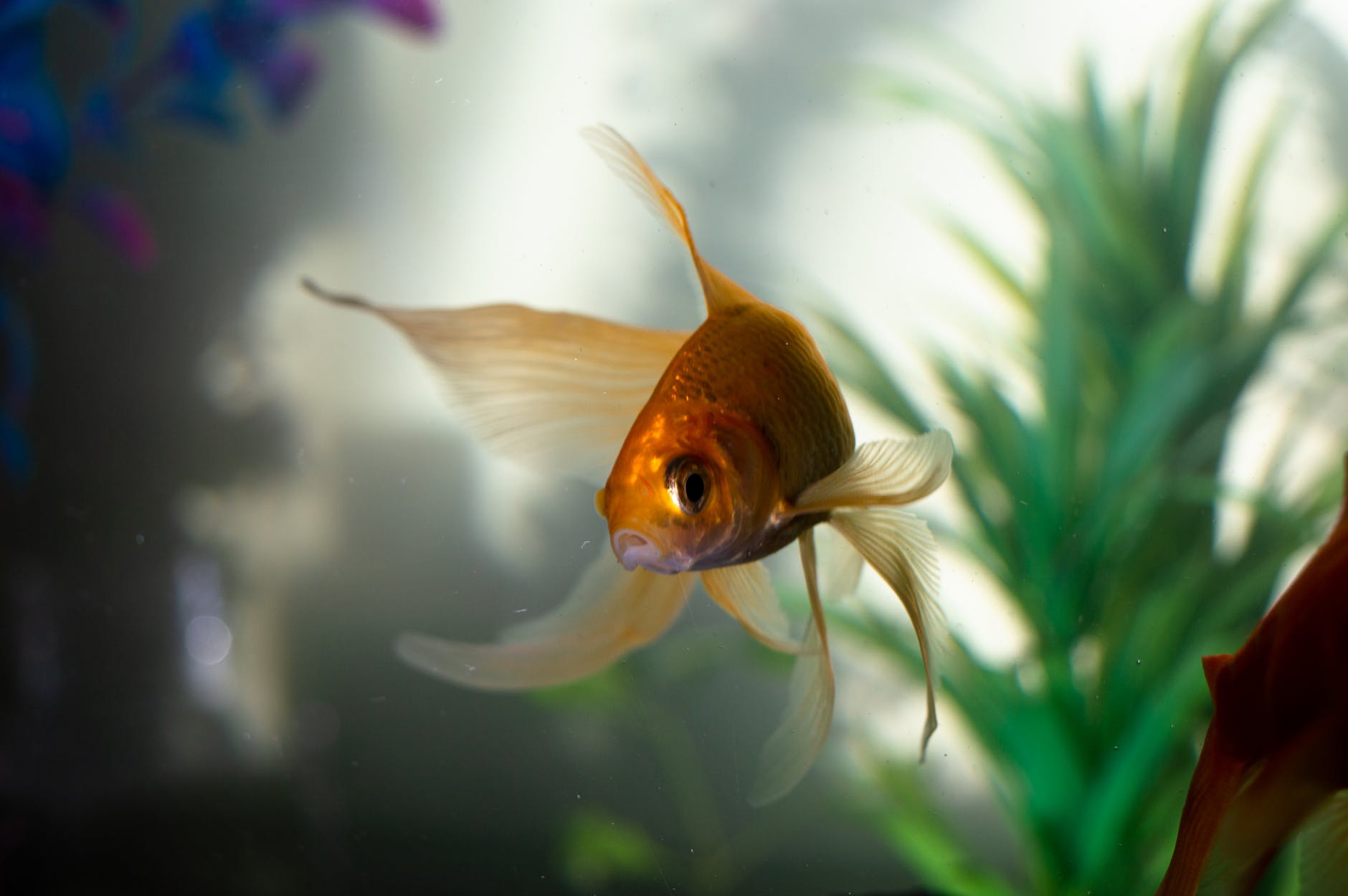
One of the things I love most about the show and Ted’s character is the way that Ted always has the perfect words and phrases to sum up a situation. I have heard them called “Lassoisms.” Every week on my way to work, I pass by a very cool store window with a Lassoism painted across it. It reads, “You know what the happiest animal on Earth is? It’s a goldfish. You know why? It’s got a 10-second memory. Be a goldfish.” When I first heard Ted say this on the show, I immediately googled to see if this was true. While Google revealed that goldfish may in fact have memories that last as long as 6 months, I understood what Ted Lasso was saying. It has been one of my intentional practices in the past. To let go. To not hold on so tightly to things that hurt. To forgive and forget, even to forgive myself. Ted’s words painted quite a picture for me, me as a goldfish. It was funny, memorable, and worth remembering. I am practicing being a goldfish–contented, calm, constantly swimming, and staying focused on the present.

A few weeks ago, I had the great pleasure of seeing Willie Nelson perform live at a local outdoor venue. I have seen him several times before, but it has been at least 10 years since my last Willie Nelson show. Ted Lasso had a great quote for his team about Willie. He said, “Our goal is to go out like Willie Nelson — on a high!” Willie is 88 now. You can see the years on his face, but his music is still the same. He can pick out songs on a guitar like nobody’s business. When I saw him, he played for at least a full hour, remembered all the words, smiled a lot, and made a great many people really, really happy. I agree with Ted Lasso. I think Willie will most definitely go out on a high. My husband and I talked before the show about how Willie will probably die doing what he loves—playing for people. What a wonderful way to go. Who doesn’t want to go out on a high? As a 50 year old that has become more and more a part of my thinking. How will I end this journey? What joy will I bring to others along the way? What will I leave behind?

Ted Lasso, while silly and wonderfully sarcastic, has given me a lot to think about. The show reminds me to believe in possibility, in potential, and in people at a time when all of that has been more difficult. And like Willie’s music, it brings me joy. That being said, I have been bothered by my dependence on TV during this pandemic. I definitely have watched more television than I ever have before. Some of it good and lots of it really not. I would like to spend more time with other practices such as reading, praying, walking, and talking with family and friends. But, TV has become an escape and solace for me in this sabbatical and strange pandemic time. I am having more difficulty than I imagined getting up off the couch and away from the comfort of my TV and my home. I have become accustomed to being here and to keeping my distance from so many people. I am struggling at times to reconnect. Something new that I must practice: reconnecting with family, friends, neighbors, and colleagues after so much separation. I know that is what I need, what we all need.  To be connected, to belong, to be loved, to be in caring and compassionate relationships. As Ted Lasso says, “If you care about someone, and you got a little love in your heart, there ain’t nothing you can’t get through together.” I know I can get through these strange times with some love and some more intentional reconnecting.

Photo by Gabriel P on Pexels.com

randoms 8.2.2021

It is hard to believe that August is here already. Hard to believe that my youngest daughter started 11th grade today. Hard to believe that we are still trying to manage life amid a global pandemic. I haven’t written a blog or random or uploaded a new haiku since June. The summer for us was busy and beautiful, but it is not ending as I had hoped or imagined. The recent rise in COVID cases, renewed mask mandates, and stagnant vaccination numbers were not at all what I expected. I did think we might see a spike in cases once students and staff went back to school but not this. Today, I am practicing care, especially for myself.

I invite you to read my latest blog on the practice of care and hope it offers inspiration for your own journey and practices.

“Never believe that a few caring people can’t change the world. For, indeed, that’s all who ever have.” —Margaret Mead

6.10.2021 randoms

I am still thinking about Nikita Gill’s poem and these very particular times we live in. Times when we are called to think clearly about who we are as humans and how live together in this world. I want to say these are tumultuous times. The COVID-19 pandemic, political polarization, and passionate calls for justice have shaken us, maybe awakened some of us, and created fractures and shifts in our perspectives and lives. I want to say these are tumultuous times, but I also want to say that the turbulence is potentially transformative and positive. Good for us all. Needed.

In my last “random” I was rambling about my strong sense of humans as both elementally the same and entirely different, each one of us unique but not—all tied together in our shared humanity. I can’t stop thinking about how we as humans have known this for so long. How great thinkers, philosophers, theologians, writers, and leaders have known this. Yet, it is so difficult to see in practice. Those who have lived out this belief have often suffered greatly for doing so—King, Bonhoeffer, Ghandi, Jesus Christ, Joan of Arc, Mandela, Malcolm K, and many more.

Dr. Martin Luther King Jr. wrote about this inescapable human connection in his Letter from Birmingham Jail. He said, “In a real sense all life is inter-related. All men [humans] are caught in an inescapable network of mutuality, tied in a single garment of destiny. Whatever affects one directly, affects all indirectly. I can never be what I ought to be until you are what you ought to be, and you can never be what you ought to be until I am what I ought to be…This is the inter-related structure of reality.” This has always been one of my favorite quotes by Dr. King. He so eloquently captures the essence of our human connections, amid the disconnection, suffering, and severity of the Birmingham jail. Centuries before Dr. King wrote this down, Chinese Buddhists described this kind of “network” in metaphysical terms–as Indra’s net.

“Far away in the heavenly abode of the great god Indra, there is a wonderful net which has been hung by some cunning artificer in such a manner that it stretches out infinitely in all directions…the artificer has hung a single glittering jewel in each ‘eye’ of the net, and since the net itself is infinite in dimension, the jewels are infinite in number. There hang the jewels, glittering like stars…If we now arbitrarily select one of these jewels for inspection and look closely at it, we will discover that in its polished surface there are reflected all the other jewels in the net, infinite in number. Not only that, but each of the jewels reflected in this one jewel is also reflecting all the other jewels, so that there is an infinite reflecting process occurring.” –Francis Cook

In this way, Hua-yen Buddhists believe that despite outward appearances, everything is essentially the same and inevitably connected. Each jewel, each human, can only be seen in and through the others. I first learned about Indra’s net more than 25 years ago when in a Southern Lit class we read Ellen Gilchrist’s Net of Jewels. I can still remember being stirred by her reference to the Buddhist idea and the beauty and possibility in this conception of our interrelated humanity. I remember going to my college library and looking for information on the net of jewels after finishing the book, and 25 years later I still come back to it. I feel something in my soul—that this is the essence of our humanity and our human journey. A recognition and realization that we are part of an interconnected and interrelated network, a never-ending cycle of life made from stars. All the same, despite our outward differences in appearance. Unique because of the place we hold in the net and because of the reflections and refractions of light from all that surround us. A jewel always looks different depending on the light and where one stands when observing it.

Archbishop Tutu and Nelson Mandela describe our interconnectedness in terms of the African understanding and philosophy of ubuntu. In its simplest form, this is the belief that “I am, because of you.” Mandela said, “In Africa there is a concept known as ‘ubuntu’ – the profound sense that we are human only through the humanity of others; that if we are to accomplish anything in this world it will in equal measure be due to the work and achievement of others.

Desmond Tutu explained, “A person with ubuntu is open and available to others, affirming of others, does not feel threatened that others are able and good, for he or she has a proper self-assurance that comes from knowing that he or she belongs in a greater whole and is diminished when others are humiliated or diminished, when others are tortured or oppressed, or treated as if they were less than who they are.

So, what do we do with this knowing? We have knowledge, but by and large are not putting it into practice. As a collective we—we seem to know, at a surface level, but we still don’t understand. Don’t live out our daily lives as if we know deeply in our bones that we only exist because of the others around us. If we can believe in our interconnectedness and accept that we are part of one greater whole, living a life that affirms the value of each human and our shared humanity, then there is hope for change and for a better future. I hope that these unsettling and unstable times, bring at least some of the change we need and remind us that we are all stardust and jewels.
6.8.2021 randoms

I came across this Nikita Gill gem last week. I haven’t been able to stop thinking of it since. So simple. So powerful. So beautiful. It has encouraged my practice of wonder this week.

We have calcium in our bones,

iron in our veins,

carbon in our souls,

and nitrogen in our brains.

93 percent stardust,

with souls made of flames,

we are all just stars

that have people names.

–Nikita Gill

I’m sure I was dreaming about this poem last night because I woke thinking about how amazing it is that all humans are essentially the same. We are mostly made of elements that were once stars. Our human bodies are born of earth and stardust, and we share almost identical DNA. Science shows that 99.9% of our genetic make up is the same and that the other 0.1% or less accounts for differences in our appearance, personality, and health. Of course, our experiences, environment, and education interact to shape who we are and will become. But again, what is passed from human to human in the cycle of life is nearly identical. On the surface we appear different and know that we are unique as individuals, but we are still elementally and universally the same. When I look around, even within my own family, I can easily see so much difference–beautiful, amazing, exciting, and sometimes bewildering and incomprehensible difference. I feel and am completely different from everyone else, yet I am not. There is only one you, only one me, and yet, we are we. We are almost completely the same while also being utterly unique! I consider this divine design.

It is hard to fathom how we as humans can hurt, imprison, oppress, abuse, shame, and utterly deny the humanity of others who are made up of the exact same things and in the exact same ways. How is it possible that we continue to see and treat some as inhuman when we have the knowledge and science that tells us there are no differences in our creation or constitution? How do we ignore the extraordinary fact that we are all made of stars and that the energy we possess is never-ending? The energy that makes up our human bodies now will never die. It will always exist. It will change form but will never end. We live within a continuous process of energy exchange and transformation. We are in a shared cycle of life, connected to every other living thing. When we recognize our shared humanity and part in the whole of creation, then how can we continue to deny rights, equity, and justice for all? I am overwhelmed by the beauty and magic of what we are—enduring stardust, spirit, and energy—all the same and all different. Always connected and never-ending.

I have been working on another blog on the practice joy. it grew out of the one last week on practicing joy and dreaming. I have also uploaded a few new haiku to share. Please take a look at my blog page and haiku (the new ones are at the top of the page) and feel free to leave me a comment or start a conversation.

6.5.2021 randoms

We watched Raya and the Last Dragon together as a family last night, and it was great. The girls loved that the cast was almost entirely Asian and really enjoyed the art and animation. I loved watching a story with young women as the main characters and with no focus on a male hero. Movie-watching together like that has me thinking about how special summer is and has always been for our family. I honestly don’t know if other families feel the same way or not, but for us summer is a necessity and means freedom from tight schedules and time for fun together. Summer means more options and opportunities. Time to imagine, to explore, to enjoy. Even when I was young and had really limited options, I loved the summertime. Summer meant time to ride my bike and play with family and friends, picnics in the park, picking and eating scuppernongs (if you don’t live down south or don’t know what these are see here: https://www.southernliving.com/garden/plants/scuppernong), swimming in the creek or at the lake, roller skating, splashing in the sprinkler, ice cream trucks, and more.

We have always been a school-oriented family. My roles as teacher, mother, doctoral student, and Head of School required that I prioritize our school calendars. Through the years, I gained a deep appreciation for the summer months and time off from school. I desperately needed it to be ready for the following school year, and our family needed it, too. Most summers we swam, traveled, celebrated birthdays, went to the library, late drive-in movies and concerts, and spent time with family and friends. Last summer was unusual, and we didn’t do any of these things.

While we are moving forward slowly and sensibly, our vaccinated family absolutely will be celebrating this summer and making the very most of every moment. Not only did we miss the fun and freedom last summer, but our oldest daughter is preparing to move to college in September. We will celebrate her graduation, her next chapter, my 50th birthday, and more this summer. I am so thankful for this time and for being on this side of the pandemic. I vividly remember my daughter telling me that she didn’t think she could make it to the end, to the summer. But, she did. We did. I hope that this summer will be one of rest, relaxation, renewal, restoration, and recreation for students, teachers, and administrators. School’s out for summer! It’s time to do things differently.

Be sure to check out my blog posts and haiku and leave me comments if you want to start a conversation. Again, thank you for being part of my journey of practice and learning.

5.20.2021 randoms

One of my daughters is in her bedroom taking online exams and the other is decorating her cap for graduation. I am definitely feeling the end of school busyness and excitement. It is time to celebrate all that teachers and students have accomplished and give gratitude for the end of this unusual and unpredictable year. As a teacher, I always greatly appreciated the notes, cards, gifts, and hugs from students and parents at end-of-year events. I remember filling my car with bags and homemade goodies on those last days of school. Teachers certainly don’t do what they do for the praise and recognition (or the pay), but it does feel so good when you realize that you have touched a student and family in a positive way and managed to bring light and love to their learning and life. In my blog post today, practicing love and leisure, I write about school practices of literacy and love and begin exploring the importance of practicing leisure.

5.13.2021 randoms

We are experiencing a fuel shortage right now here in Atlanta and in several places around the country– a cyber-attack rendered a pipeline inoperative. While this may not seem like a very big deal, the anxiety and worry I am seeing and hearing online and among friends and family is real. People are concerned about getting to work and to upcoming graduations. It feels like so many of us are already stretched very thin. The chronic stress of COVID-19, concerns over economic instability, the collective cries for social justice and systemic equity, the realities of climate change, the constant political divisiveness, and so much more continuously swirl around us. The weight of this particular time in history is heavy, and I find myself very distracted these days.

There are wonderful things, beautiful things happening all around me, but often I find only momentary comfort there. My goals for sabbatical—being present, taking care, finding joy in books and in writing—are more elusive than I had hoped. Instead, I find myself looking to escape–watching HGTV and Food Network shows or busying myself with laundry, cooking, and cleaning. Even when I try to focus and be present, I feel an inner restlessness. It is hard to process what is happening all around. I sometimes feel powerless, not hopeless, but powerless against the constant push of the world. I want to find freedom, peace, and power in the spiritual spaces; sometimes I do.

If these random posts resonate with you or you are interested in longer pieces related to education, learning, and practice, I invite you to visit my blog page. The longer pieces there are intended to spark conversation and serve as catalysts for thought and hopefully for change.

5.5.2021 randoms

Today is May 5, a widely recognized holiday in the United States. Cinco de Mayo has been enjoyed by millions of Americans as a day to eat our tasty tacos and drink fine Mexican tequila. People flock to local Mexican and Tex-Mex restaurants on May 5th for bowls of salsa and chips and take turns passing around the sequined sombreros and taking selfies. Call me cynical, but I think this kind of celebrating is degrading and adds insult to injury. We have detained thousands of our Mexican neighbors at the border, exploited their labor here in our country, and denied them rights to citizenship and equality under our laws.

Cinco de Mayo is, in point of fact, a real holiday for the Puebla people. They won an important victory over the colonizing French in 1862. In a show of solidarity, the US celebrated this victory with Mexico in 1863. I think I could eat tacos and nachos every day if I wasn’t always trying to watch my weight. But I do think that if we are going to celebrate this day, co-opt it for our eating and drinking pleasure, then we should at least recognize and reflect on the reason for the holiday. We should know our history and think about how and why we are allies or not to our southern neighbors. I do hope that people will patronize their local Mexican establishments today, but I also hope that they will think about our relationship to those humans who provide that food and who suffer under our laws and order.

4.29.2021 randoms

I haven’t had time to think about a blog recently. We traveled to California and to New York so that our daughter could visit the campuses of her top-choice schools. We waited until the very last minute so that we could all be vaccinated before traveling. Now, she has made her decision, and we are focused on the final weeks of school and graduation. I have also been busy working in the garden here at home. This is the first spring in a very long time that I have had the time to do it. I find that this work with the earth allows me to practice awareness and presence in ways that I have missed very much.

I am in the middle of Isabel Wilkerson’s book Caste and find her words and ideas filling my thoughts throughout the day. The book is clear and compelling. The argument she presents is powerful and strong. I will write more about it later but highly recommend it to everyone and have already ordered Warmth of Other Suns to read next.